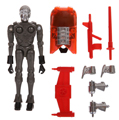
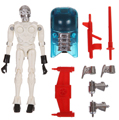
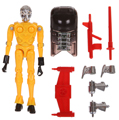
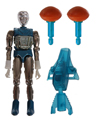
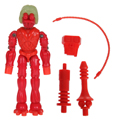
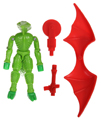
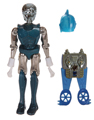
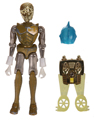
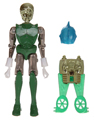
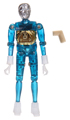
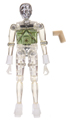
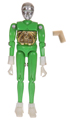
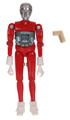
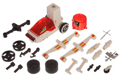
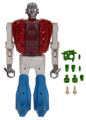
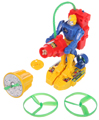
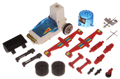
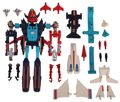
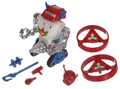
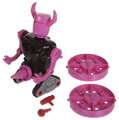
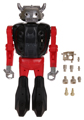
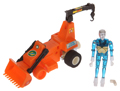
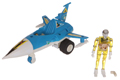
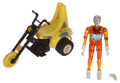
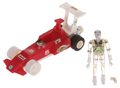
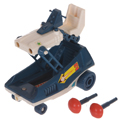
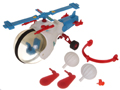
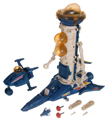
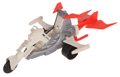
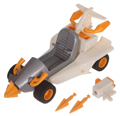
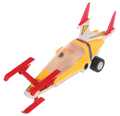
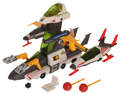
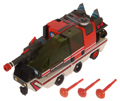
In 1976, American toy company Mego Corporation struck a deal with Japanese toymaker Takara to license toys from the latter's popular Microman line for sale in the United States and Canada. Mego had already achieved success in the nascent action figure boys' toys market with their 8-inch figures of licensed characters from Marvel and DC comics, Star Trek, Planet of the Apes, and others, and Takara was enjoying massive domestic sales of their new Microman figures and accompanying vehicles. Both had unwittingly arrived at a highly compatible business model and toy feature: interchangeability. Mego's own figures used the same interchangeable parts over and over, while producing a few unique parts as well as removeable costumes to allow the factory tooling to represent a wide range of characters, while Microman used a system of 5mm diameter posts and holes to allow pieces to be exchanged and build a wide variety of vehicles and play sets.
Mego's deal would portend both success and eventual disaster. While Micronauts initially sold exceptionally well due to incredible play value and intricate poseability for such a small scale, Mego president Martin "Marty" Abrams was in Japan while a Fox studio representative visited Mego HQ to offer a license to produce Star Wars toys. With no one to make an executive decision, the Fox rep went to Kenner Toys that same day and signed a deal for merchandising the upcoming film. In 1977, both toy series debuted on American store shelves, with Micronauts a few months ahead of Star Wars. The Micronauts toys were much more intricate (and expensive) than their 5-point-articulation Star Wars counterparts, and sold well, with advertisements touting the universal compatibility of the 5mm joint system across all figures in the line. Mego partnered with Marvel comics to produce a long-running comic book series to help publicize the figures. But then, Star Wars had one of the most influential blockbuster films of all time. For a time, the general sci-fi craze may even have buoyed Micronauts's sales, but by 1980, Mego was in deep financial trouble and pivoting towards electronic toys. The final Micronauts figures were only available in Italy through famous licensee Gig (pronounced zheeg, with other European distribution carried out by Grand Toys and Lion Rock.
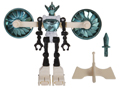
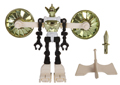
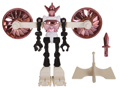
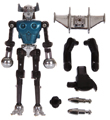
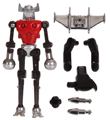
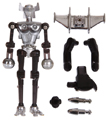
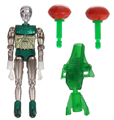
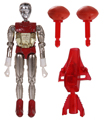
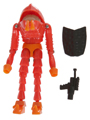
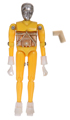
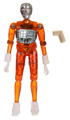
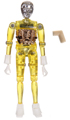
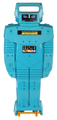
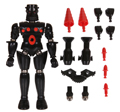
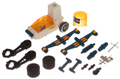
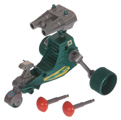
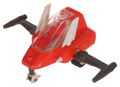
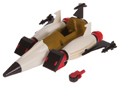
The first assortment of Micronauts in 1977 consisted primarily of selections from Microman: Zone and Microman: Victory series, with only minor variations visible on the figures. The translucent Time Travelers, each packed with a semi-random interchangeable chestplate and in a variety of body colors, formed the core of the line, even being packed as a bonus with small wind-up vehicles. The gyrocopter-like Acroyears menaced the Micronauts with colorful vacuum-metalized "chrome" rotors, swords, heads, and chestplates. Primarily die-cast figures with spring-loaded action features were available at a higher price point as the Galactic Warriors and Space Gliders. With each figure type available in three or four colors, the four molds were able to offer a thirteen unique figures (coincidentally, the same as Kenner's first wave of Star Wars). Larger vehicles and playsets including the motorized Biotron rounded out the offering. Each vehicle came unassembled, with a couple including a flat metal screwdriver to aid in the assembly of nuts and bolts. The resulting set could then be partially disassembled and reconfigured into different shapes due to the interchangeable 5mm parts.
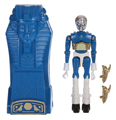
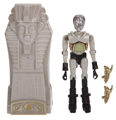
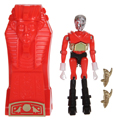
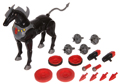
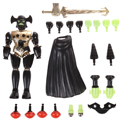
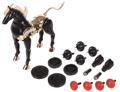
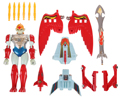
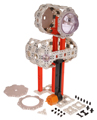
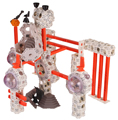
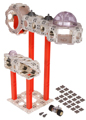
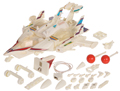
By 1978, both Micronauts and rival Star Wars were in full swing production, and Mego continued to pull ahead in available variety. Two new four-inch figures were available, the less-poseable but more-modular Acroyear II, and a 1977 Microman Command figure as Pharoid, including his Egyptian-inspired sarcophagus. Since Microman Command had only been introduced a year prior, some versions of Pharoid were produced in the same Japanese facility, until Mego obtained its own slightly-modified copy of the tooling to operate in Hong Kong. The vehicle offerings of the year were primarily modified die-cast versions of 1976 Microman: Spy Magician Spy Cars, with the impressive 70-piece Battle Cruiser and Giant Acroyear as prestige pieces. Mego also sourced toys from Takara's 6-inch Magnemo line, by retooling and redecorating Kotetsu Jeeg and his robo-horse Panzeroid into Force Commander and Baron Karza, leaders of the Micronauts and their enemies, respecitvely. According to dealer catalogs, and perhaps late in the year, Mego dipped their toes in new tooling with Phobos and Nemesis sporting newly designed heads on recolored Biotron and Microtron bodies. Finally, Mego introduced the Micropolis playsets, birthed from an aborted Microman Build Base series. These sets consisted of geometric panels connected by semi-flexible "Micro-Hinges" functioning like a sort of gusset plate to link the panels at their edges. The 3D shapes constructed this way could then be connected with large beams and adorned with clear dome windows, cranes, computers, and elevators. Each set included the pieces on sprues (or "trees"), resulting in the included part count always following certain proportions (for example three triangles per each eighteen squares). This production style allowed the creation of five sets with very few pieces unique to any given set.
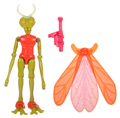
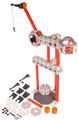
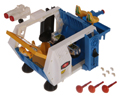
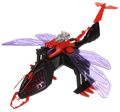
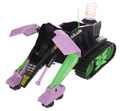
1979 saw Micronauts clearly past its peak sales, despite ever-more intricate designs. Mego sought to distance itself from reliance on Takara Microman releases, and designed its own new line of figures with the Aliens: bizarre creatures in the standard 3 3/4" scale, each with unique body plans and glow-in-the-dark vinyl rubber brains. The Aliens even got their own unique beastly vehicles in Hornetroid and Terraphant, also whole-cloth Mego creations. Weakening demand was most apparent in the rest of the vehicle selection: the fan-maligned Trons, made from recycled parts of other sets featuring new colors but poor fitment, the rather basic Taurion and Solarion, and the Takara-designed masterpiece Star Searcher, a modular construction and reconnaissance vehicle. 1979 may also have seen the introduction of the Rocket Tubes (release date uncertain), a pneumatic tube transport system for figure capsules powered by a large motorized fan. 1980 was even more dire. A second wave of impressive Aliens figures was released alongside opaque re-issues of the Time Travelers, a final Micropolis set, and a highly-modified Microman Surveyor-3 as the Star Defender. The last Mego-designed Aliens vehicles would trickle out mostly in Europe, especially Italy, alongside Gig's own exclusive Magnemo redecos and retools. As Star Wars - Empire Strikes Back hit the silver screen and toy shelves, Micronauts was all but dead.
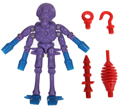
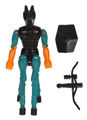
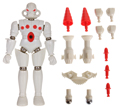
Mego would file for bankruptcy and be defunct by 1983. Despite early successes by partnering with major character brands, Mego would not live to see the heyday of action figure toys in the 1980s, where the toys themselves became the entertainment brands, with cartoons airing every Saturday to keep kids hooked on products. The mysterious companies Hourtoy and M&D Toys would reissue some of the older Micronauts items in bizzare colors for The Interchangeables in the 1980s, and Pac Toys would frankenstein together some of the Aliens figures for their Lords of Light, but neither saw broad distribution, languishing instead in dusty clearance aisles. The innovative nature of both Takara and Mego's figure designs would stick with the generation of kids that had them, however, leading to a strong cult following emerging in the early days of internet-based fandoms. These fans would even band together for an impressive, if tragic achievement with Palisades Toys' Micronauts Retro Series.